Monday, October 24, 2005


The Potala, the winter palace of the Dalai Lamas, in Lhasa Tibet. Posted by Picasa

Some of the gorgeous scenery on the trip from the airport into Lhasa, Tibet. Posted by Picasa

The view from the airport in Lhasa Tibet. After all of my smog filled days in China it was such a relief to see blue sky. Posted by Picasa

Tibet: the Roof of the World

Tibet should come with a warning: it is painful for your body, but even more painful for your heart. The body pain comes from Tibets' altitude. Of all the countries in the world, Tibet is the highest. In a moment of total stupidity I decided not to take my pills for altitude sickness and paid for this decision. Lhasa, the capital of Tibet, where I stayed, is at 14,000 feet and the highest part of Tibet is 16,000 ft. At 14,000 feet oxygen is at 65% of what it is at sea level. The result was 3 days of excrutiating headaches, always gasping for breath, continuous chest pains, and a cold. Eating dinner at the hotel was like being in the hospital. We tourists were truly a ragged looking group. I was tempted to use Valerie's expression; "you want some cheese with that whine?".....The pain in my heart, however, is a different matter. You really can't talk about Tibet without touching on their sad political situation. Like Bhutan, Tibet is strongly Buddhist. For centuries Tibet was ruled by a succesion of Dalai Lamas, men who served as both political and religious leaders of Tibet. The Buddhist religion teaches non-violence and the Dalai Lama is a living example of those teachings. For centuries Tibet was a country untouched, protected by the surrounding mountains. Tibetans lived their compassionate peaceful existence until Oct 7, 1950. Here is a paragraph from a tour book that summarizes the change;....."Unknown to the Tibetans, the communist takeover of China was to open what is probably the saddest chapter in Tibetan history. The Chinese "liberation" of Tibet was eventually to lead to 1.2 million Tibetan deaths, a full-on assault on the Tibetan traditional way of life, the flight of the Dalai Lama to India and the large-scale destruction of almost every historical structure on the plateau." To this day the Dalai Lama continues to live in India, waiting for the day when he will be restored to his rightful place in Tibet.......Visiting Tibet made me realize how quickly the Tibetan culture is vanishing and the Chinese culture is taking over. (Visit now while you have a chance!!!) The few temples that are still standing are riddled with destruction from the Chinese invasion. Almost overnight, Lhasa has been turned into a shopping mecca. Chinese is the language seen everywhere with Tibetan seen and heard mainly in the temples. All Tibetans must speak Chinese in order to get work. The Chinese army is everywhere. Loptsong, my guide, was taking me to a beautiful temple close to my hotel. A visiting Chinese dignitary was using the temple for a meeting and hundreds of soldiers in riot gear kept the religious pilgrims and tourists from getting close to the temple. It is truly heartbreaking. If you want to learn more about this issue and see the gorgeous scenery near Tibet, do see the movie "Seven years in Tibet." It is the true story of Tibet and the Dalai Lama before, during, and after the Chinese takeover. Interestingly, the movie is banned in Tibet.....Despite all my kvetching, I loved being in Tibet. You can't look at the temples and mountain scenery without being awestruck. The Tibetan marketplace is huge and gives you a rare opportunity to interact with the Tibetans. A warning - yak is an important part of Tibetan life, both as a beast of burden and as food. Butter is made from yak milk and the national drink - butter tea - is made by pouring hot water over yak butter. Yummy! I also had sweet and sour yak for dinner. It tasted like beef......A warning to Tibet - I will return for at least a week and this time I will take my pills for altitude sickness.....Farewell for now. Next stop Hong Kong and the 27 hour trip home. Happy Trails, Marion
Pictures Below from China!

People I met selling their vegetables across the street from one of the tourist sites. The woman with the tomatoes kept hitting me in the arm and yelling "Hey, hey, hey!" I finally started hitting here back and yelling "what, what, what?" Everyone started laughing at that point and she couldn't keep a straight face . Posted by Picasa

Running the gamet between the terra cotta warriors and our car; a huge opportunity for some last minute impulse shopping. (Last chance to buy that lifesize terra cotta warrior, a pomegranite, and an animal skin, all in one place.) Posted by Picasa

Pieces that have been placed in a nearby museum. The carriage top left is for a high ranking soldier. The "turtle" carraige on the top right was for the emporer. Xi'an, China Posted by Picasa

Proof that I was actually there! It is still hard to believe. Posted by Picasa

More details of the terra cotta warriors of Xi'an Chine. In the photo (upper left corner) the space between the horses and men is where a wooden carriage would have been. The 2 men behind the horses have their arms raised to hold the reins. Posted by Picasa

Closer look at the warriors of Xi'an, China Posted by Picasa

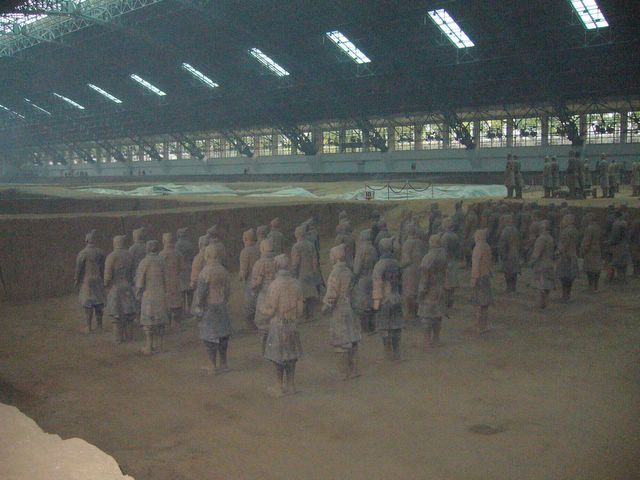
Home of the terra cotta warriors of Xian, China Posted by Picasa

Saturday, October 22, 2005


Grave site of Emporer Qin Shi Hung who created the terra cotta warriors, Xi'an China Posted by Picasa

Statue of Lady Yang, Huaqing Palace, Xi'an China Posted by Picasa

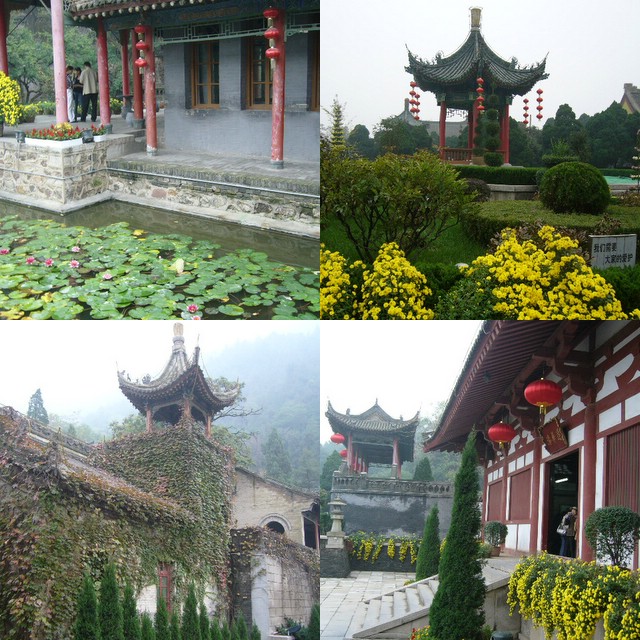
Details of Huaqing Palace, Xi'an China Posted by Picasa

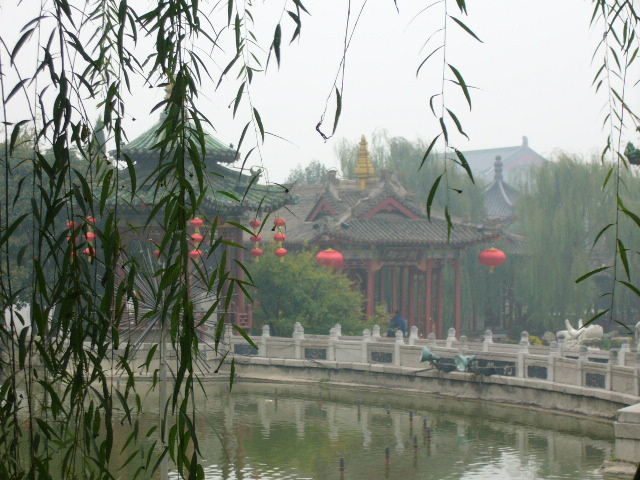
Mists over Huaqing Palace, Xi'an China Posted by Picasa

Huaqing Palace, Xi'an, China Posted by Picasa

One of he buildings of the Huaqing Palace, Xi'an China. Posted by Picasa

Xi'an China; All the King's Horses and all the King's Men

Just before leaving Mumbai, the devastating quake hit Pakistan and parts of India. I didn't want my Brother Eddie to worry, so I gave him a call. Unfortunately my math was off and I called him at 3am his time. Eddie wasn't worried. Eddie was asleep and oblivious to anything going on in the world. Timing is everything....From Mumbai I flew to Hong Kong and then a quick trip to Xi'an China, a very special place for me. I was in graduate school in March 1974 when I picked up a copy of Time magazine with a picture of the terra cotta warriors from Xi'an on the cover. Six local farmers had been digging a well when they discovered a piece of terra cotta which led to what many feel is the greatest archeological find of the twentieth century. This led to the excavation of the burial grounds of Emporer Qin Shi Hung (259-210 bc), the first emporer to unify the 7 warring states into what is now China. He became King at the age of 13 and spent most of his reign and his country's money on preparing for his afterlife. The project took 720,000 workers and 39 years to complete. In order to protect him in the afterlife, he had over 7,000 life-sized terra cotta horses and armoured warriors created as well as more than 100 wooden charriots and many exquisite ancient weapons. To me the most fascinating aspect of the find is that each warrior is an individual - they are all different and each one was possibly modelled after real soldiers in his army. The details are exquisite. Since seeing the original magazine article, I have seen numerous pictures, but I wasn't sure how they would be displayed. My "terra cotta warriors" guide, who called himself Nebraska, led me to an enormous gymnasium-type structure that covered the area of 3 football fields. Walking inside, I found the warriors lined up in military precision facing me, looking up from the furrow created to free them from the earth. The effect is profound: the silent warriors who have been hidden for so long are standing in formation in a kind of half-light that protects them from fading. It was worth the wait! No amount of imagination can prepare you for that first impact. I spent hours taking pictures of all 3 sites. Even though 100s of archeologists have been working on the site since the 70s, most of the work is ahead. The work is painstaking and the warriors greeting you have all been constructed from the shards found at that location. ......After several hours, I bid Nebraska good by and headed on to the next stop; the actual grave site of Emporer Qin Shi Hung, just down the road from his warrior protectors. A very quick tour there and then on to the final part of the day, a visit to Huaqing Palace. Originally the palace was built by Chinese Emporers to take advantage of a natural hot springs flowing there. What made it famous was the great love affair between Emporer Li Long ji and Lady Yang. The Emporer had 1000s of concubines when he noticed and fell in love with Lady Yang. She was the 18 year old concubine of his son, but the son, seeing that his father was in love, gave Lady Yang to him as a gift. The emporer was so in love with her that they would spend months at the Huaqing Palace, singing, dancing, playing cards, and soaking in the tubs fed by the hot springs. (I think this is where the concept of California was born). The story also has political intrigue and the Emporer was forced to kill Lady Yang by cutting her throat. He lived the rest of his life in misery, missing her terribly, but after his death they were once again reunited in love - or so the story goes.....Romance nothwithstanding, I had to say farewell to Xi'an and board a plane for Tibet. Stay tuned and happy trails......Marion

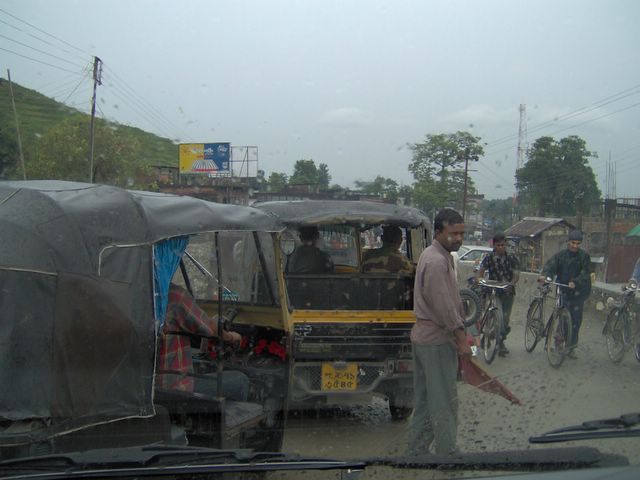
Took tooks in the rain in India. Posted by Picasa

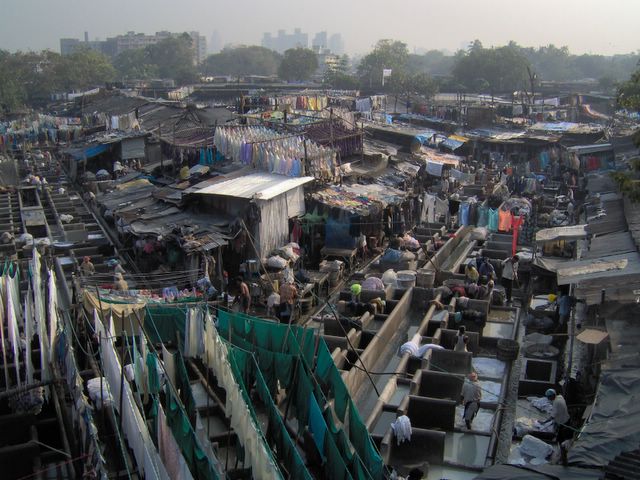
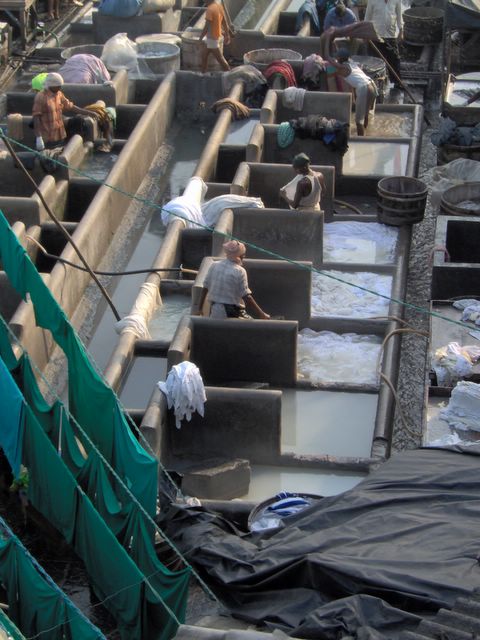
A Mumbai favorite of mine - the laundry; 700 men doing laundry at all hours. All laundry from Mumbai comes here. My laundry was somewhere in there and they did an incredible job! Posted by Picasa

Each man pays a fee for the use of a stall and for the water he uses. In turn he is payed piece work for the laundry he washes. Men also do all of the ironing. Notice the guy in the last stall to the right. Time to buy more water!!! Posted by Picasa

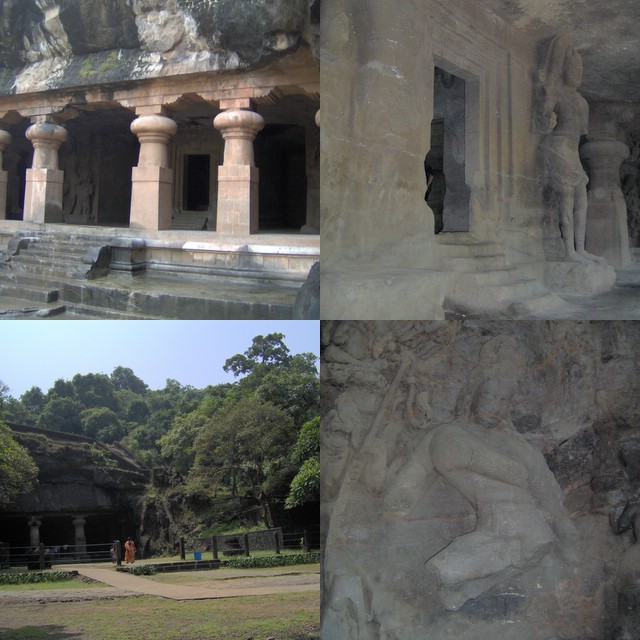
A quick look at the beauty of Elephant Island in Mombai, India. Posted by Picasa

Punja and I aboard the water taxi to Elephant Island, Mumbai, India. Posted by Picasa

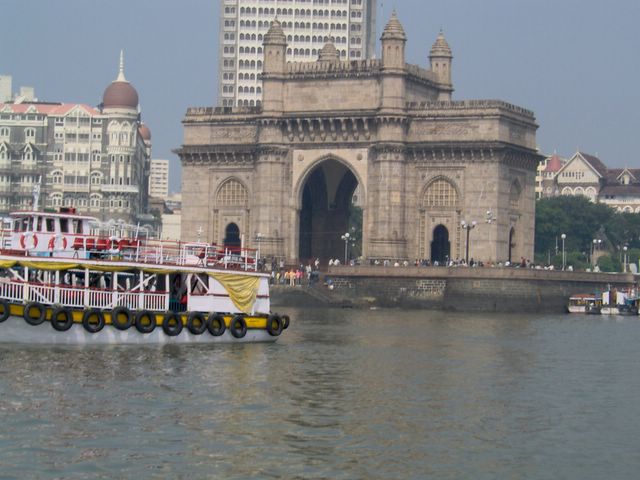
The Gateway to India in Mumbai, India. To the left is the Hotel where Clinton stayed during one of his visits. The Indians seem very proud of his visit. The boat in foreground is one of the taxis that take you to Elephant Island, and ancient Hindu religious shrine. Posted by Picasa

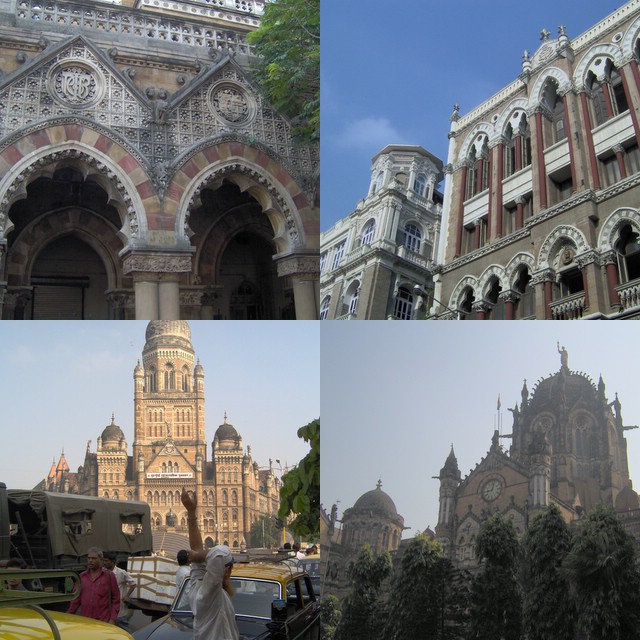
Samples of the gorgeous architecture built by the British in Mumbai, India. Posted by Picasa

Victoria Terminus, a gorgeous example of Italian Gothic architecture built by the British in Mumbai, India. Posted by Picasa

Puja, travel guide extraordinairre, in Mumbai, India, sitting in the lobby of my favorite hotel, Ley Royal Meridian. Posted by Picasa

Return to India and a Visit to Mumbai (formerly known as Bombay)

The 3 days in Bhutan ended much too quickly. My recommendation for anyone planning to visit - take at least a week. In 3 days most of the trip (80% ???) involves driving from place to place, leaving you little time for sightseeing and getting to know the people....Leaving Bhutan, the last wild ride to the airport took over 5 hours and included a mad search for an ATM in the small towns in India on the way to the airport. It was great fun showing Kinsang his first ATM and how it worked. Sign seen on the way to the airport; "It's a highway - Not a runway - Don't take off." Great advice when you are driving on a single lane winding around a mountain at 9,000 ft.... The flight to Mumbai brought me to the nicest hotel I have ever experienced - Le Royal Meridian. Imagine if the Four Seasons took over the Taj Mahal. The hotel experience alone was worth the trip: major pampering at 1/3 the cost of the Four Seasons. They had to force me to leave, kicking and screaming. Delhi may be the capital of India, but Mumbai is the financial and trade center. It is a huge bustling city on a beautiful harbor, filled with spectacular 200 year old British architecture. For the first time on my trip, my guide was female, a wonderful woman named Puja. The majority of people in India are Hindu and so much of Indian culture is intertwined with Hindu beliefs. Puja had a passion for the subject and brought so much of ancient India alive for me, especially the ferry trip to Elephant Island (an ancient Hindu holy site). Elephant Island is also the home of countless monkeys. My last image of the island was a monkey sitting beside me drinking a can of orange Fanta, just like any other tourist....Most of the time in Mumbai, however, I was on my own exploring. A took took (3 wheeled golf cart/taxi) took me to a "shopping center" - translation 3 story store about the size of a CVS. Fun shopping but the trip back brought an extra challenge - no one wanted to take me back to the hotel. I showed the card with the hotel name and address to 4 drivers and each said "no." Finally a kind stranger (like the ones I have always depended upon), had a lengthy animated discussion with one of the drivers and he agreed to take me. Unfortunately he took me to the wrong hotel and had no idea where my hotel was located. At this point we drew a huge crowd of took took drivers. They all said they knew how to get to my hotel and would take me for a price, but no one was willing to help my driver with instructions. I finally called the hotel and the desk clerk gave the driver instructions (in Hindi) and we were off in the right direction. He was going to charge me $2.00 for the 2 hour adventure but my conscience made me pay him much more for the effort.....Next stop - Hong Kong, and visits to Xi'an China and Tibet. Namaste, Marion